
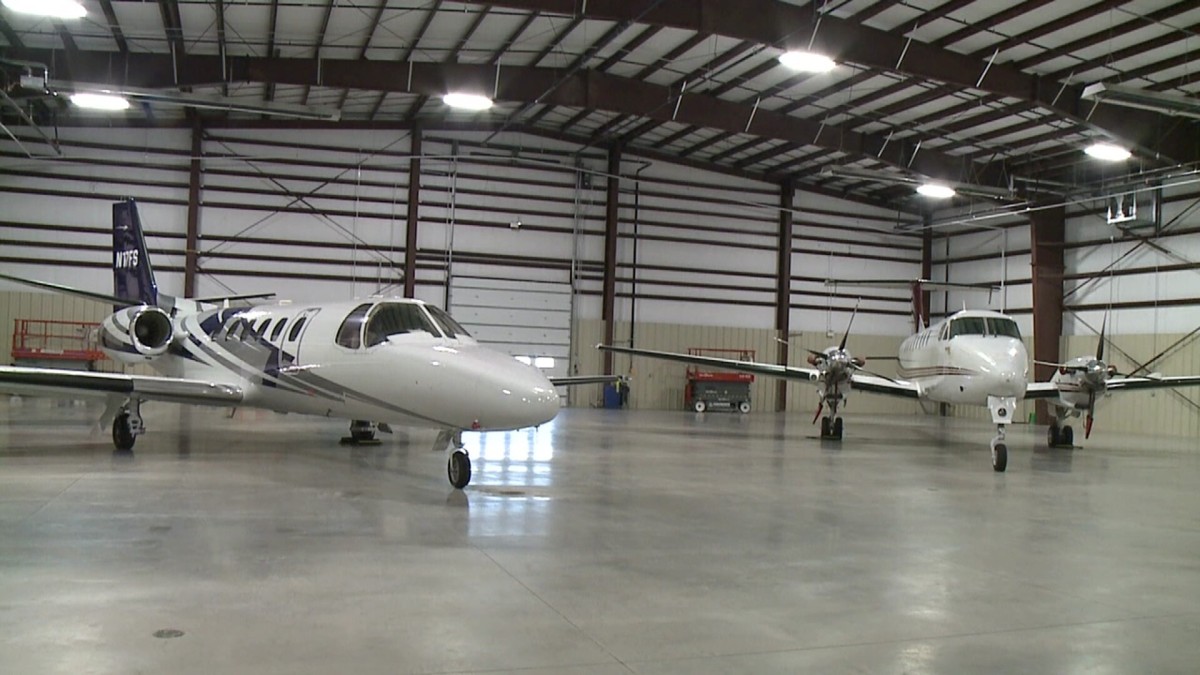
 A steel structure hangar is a specialized facility with steel as its core load-bearing structure, used for parking, maintenance, repair, or scheduled maintenance of aircraft. It features large span, high space, and strong load-bearing capacity, and is suitable for various types of civil airliners, military aircraft, and general aviation aircraft.
I. Core Advantages
Compared to concrete hangars, steel structure hangars offer significant advantages in aviation scenarios, primarily in four aspects:
1. Large Span Adaptability: They can achieve column-free spaces of 30-100 meters or more, meeting the parking and turning requirements of wide-body aircraft (such as the A380 and Boeing 747) without
columns obstructing work space.
2. High Construction Efficiency: Steel structure components are mostly prefabricated in factories, shortening on-site assembly time by 30%-50% compared to concrete, making them particularly suitable
for the rapid commissioning needs of airport expansions.
3. Strong Seismic and Wind Resistance: Steel has good toughness, achieving seismic resistance of up to 8 degrees or higher, and can withstand strong wind loads through optimized roof structures
(such as curved roofs), making them suitable for airports with complex climates such as coastal and high-altitude areas.
4.Later Retrofitting: Steel structures are disassembled and expandable. Upgrading to hangars for larger aircraft can be achieved by adding steel trusses and extending the span, with retrofitting costs
approximately 40% lower than concrete.
II. Core Structural Components
The structural system of the steel structure hangar mainly comprises five modules: load-bearing frame, roof system, wall system, hangar door, and auxiliary systems.
III. Common Types
Based on aircraft type and usage scenario, steel structure hangars are mainly divided into three categories:
1. Parking Hangar:
Core Requirements: For aircraft parking only, no complex maintenance work.
Key Parameters: Span 30-60 meters, eaves height 8-12 meters, ground only needs to support the aircraft's weight.
Applicable Scenarios: General aviation airports (helicopters, small passenger planes), airline aprons.
2. Maintenance Hangar (MRO):
Core Requirements: Capable of routine aircraft maintenance (such as engine inspection, fuselage cleaning).
Key Parameters: Span 50-80 meters, eaves height 12-15 meters, requires provisions for crane tracks and maintenance platforms.
Applicable Scenarios: Civil aviation airport maintenance areas, aircraft maintenance companies.
3. Scheduled Maintenance/Major Overhaul Hangar:
Core Requirements: Capable of deep aircraft overhaul (such as fuselage disassembly, component replacement).
Key parameters: Span 80-120 meters, eaves height 15-20 meters, ground load capacity 50-100 kN/m², requires a large overhead crane (load capacity over 50 tons).
Applicable scenarios: Large hub airports, aircraft manufacturer overhaul bases.
IV. Key Design Considerations
1. Load Calculation: Static loads (roof weight, maintenance equipment weight) and dynamic loads (aircraft movement impact, crane operation load), as well as special loads (snow accumulation,
ice accumulation, strong winds), must be considered simultaneously.
2. Door Design: The main door is a weak point and requires a multi-leaf linkage structure with an emergency manual opening device. Sealing strips must be weather-resistant (-30°C to 60°C) to prevent
wind and sand/rainwater infiltration.
3. Corrosion and Rust Prevention: Airport environments are often humid (especially coastal areas). The steel structure requires anti-corrosion treatment with a primer (epoxy zinc-rich paint) + topcoat
(fluorocarbon paint), ensuring a service life of 20-30 years.
4. Fire Protection System: High-altitude fire monitors (covering the entire hangar space) must be installed. Smoke vents must be provided on the roof, and the steel structure surface must be coated with
fire-retardant paint (fire resistance rating of not less than 1.5 hours).
If you need a steel structure hangar (suitable for various aircraft types including commercial airliners and general aviation aircraft), please contact us immediately. We can respond quickly to your needs,
providing customized design solutions and professional construction services, covering all aspects from foundation load-bearing to door systems and fire protection configurations, ensuring that the
hangar is safe, durable, and meets the requirements of your usage scenario.

By clicking 'Allow All', you agree to the storage of cookies on your device to enhance site navigation, analyze site usage and assist with our marketing efforts.